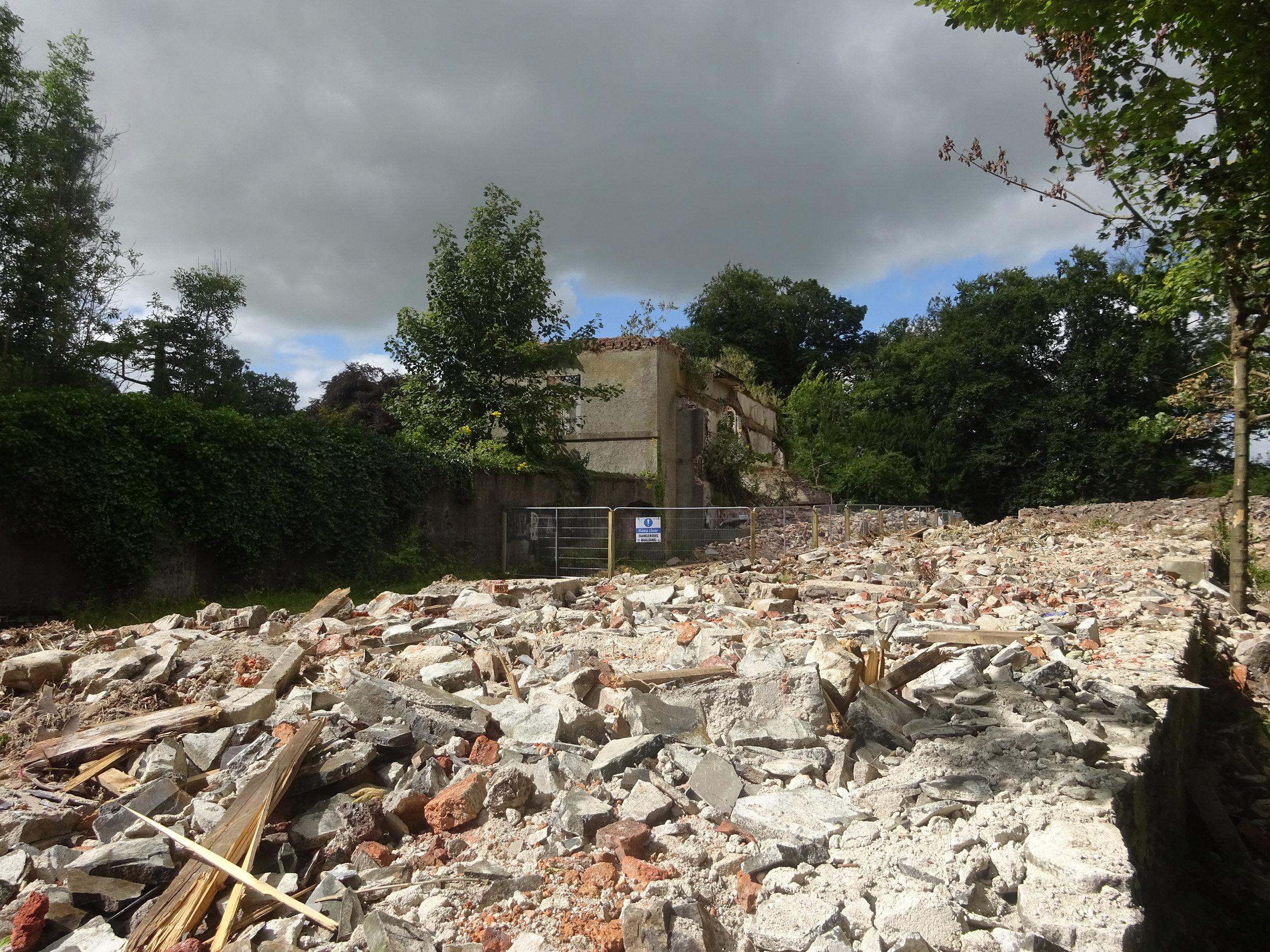
Ulster Architectural Heritage (UAH) welcomes the £50,000 fine imposed following unauthorised demolition at the hBrookfield House in Banbridge.
Ulster Architectural Heritage (UAH) welcomes the £50,000 fine imposed following unauthorised demolition at the historic Brookfield House estate in Banbridge, but stresses that effective heritage protection must focus on preventing such losses in the first place.
Brookfield House, a Grade B2 listed Georgian residence dating from around 1760, was built for the Smyth family, prominent figures in Banbridge’s linen industry. Together with its associated buildings and gate lodges, it formed an important part of the town’s architectural heritage. The gate lodges were B2 listed buildings in their own right.
Residence and gate lodges have been on the Heritage at Risk register since 2003, and 2013 respectively. When the gate lodges along with parts of the residence’s outbuildings were demolished in 2024, UAH publicly condemned the demolition, calling for action to protect Northern Ireland’s historic environment.
The subsequent prosecution and substantial fine are welcome, demonstrating that breaches of listed building legislation can carry serious financial consequences. However, financial penalties cannot recover historic buildings once they have been destroyed.
The Planning Act (Northern Ireland) 2011 provides both local councils and the Department for Communities, through its Historic Environment Division (HED), with statutory powers to protect listed buildings. These include listed building enforcement notices, urgent works to secure their preservation and, in certain circumstances, repairs notices, and compulsory acquisition.
UAH believes these powers must be exercised proactively and decisively, rather than relying on prosecution after irreversible damage has occurred. Both HED and local authorities have important responsibilities in identifying buildings at risk and intervening before their loss becomes inevitable.
While public safety must always be paramount, demolition of a listed building should remain a last resort, considered only after reasonable alternatives for stabilisation, repair and conservation have been properly explored.
UAH hopes this prosecution will serve as a deterrent to unauthorised demolition, while prompting greater emphasis on early intervention and effective enforcement across Northern Ireland.
Ultimately, the success of heritage protection should be measured not by the number of prosecutions secured, but by the historic buildings saved
Published: 9th November, 2026
